
When a product description says “gabardine”, it tells you something useful, but not everything you need to know. Gabardine describes a closely woven twill fabric construction, not one single fibre or one guaranteed level of performance. It can be made from wool, cotton, synthetic fibres or blends, and the finished cloth may be lightweight and fluid or firm enough for a hard-wearing jacket.
A dependable judgement therefore starts with a simple distinction: the fibre tells you what the yarn is made from; the weave tells you how those yarns are arranged; weight, yarn preparation, finishing and garment construction complete the picture. Read them together and you can make a sensible buying decision without treating a premium-sounding label as a promise of waterproofing, warmth or longevity.
That practical approach suits the way Laird Utility describes its clothing: garments intended to be both stylish and useful across urban and country life. Use the specification to ask what the cloth suggests, what it leaves unknown and whether those qualities suit the way you intend to wear the garment.

Start with the fibre label, then separate it from the weave
“Gabardine” is a construction term. It usually refers to a twill with a pronounced diagonal surface and a relatively close, stable arrangement of yarns. The word does not, by itself, tell you whether the cloth is wool, cotton, a blend or a man-made fibre. Nor does it establish a particular weight or weather rating.
Read percentages as clues to character, not as a league table. A 100% wool gabardine may offer a refined handle, useful crease recovery and natural warmth, but its behaviour still depends on the wool, yarn preparation, density and finish. A 100% cotton gabardine may feel dry, robust and straightforward, yet its rain performance and tendency to crease will depend on the cloth and treatment. A blend may combine qualities, perhaps resilience, softness, stability or easier care, but the percentages alone cannot tell you precisely how it will feel or wear.
Look for the order and completeness of the information. “Wool gabardine” is more helpful than “gabardine”, while “100% wool, worsted yarn, tightly woven” gives you more to work with than a fibre name alone. If the description does not state the percentage, weight or finish, keep your conclusion provisional and ask the maker rather than filling the gaps with assumptions.
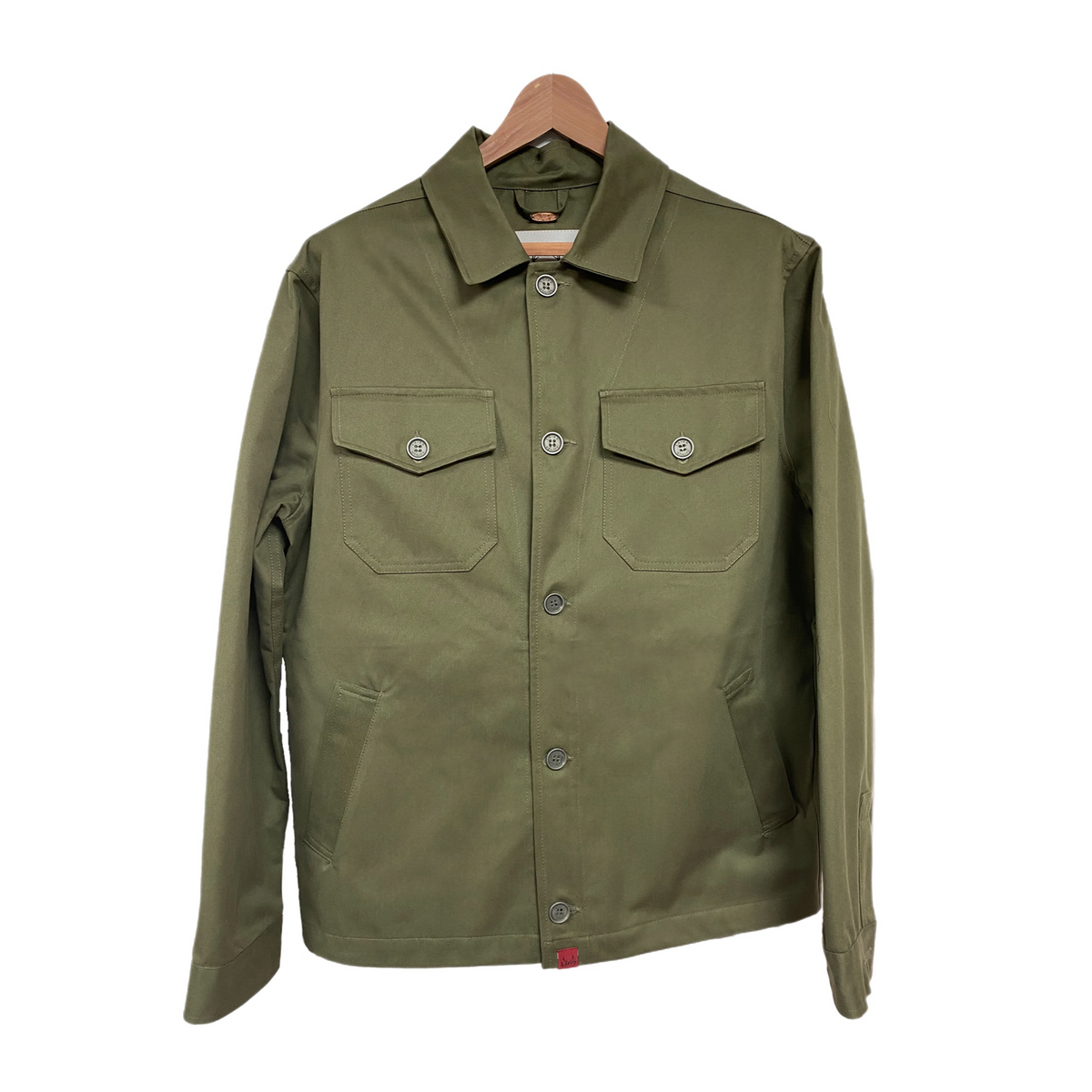
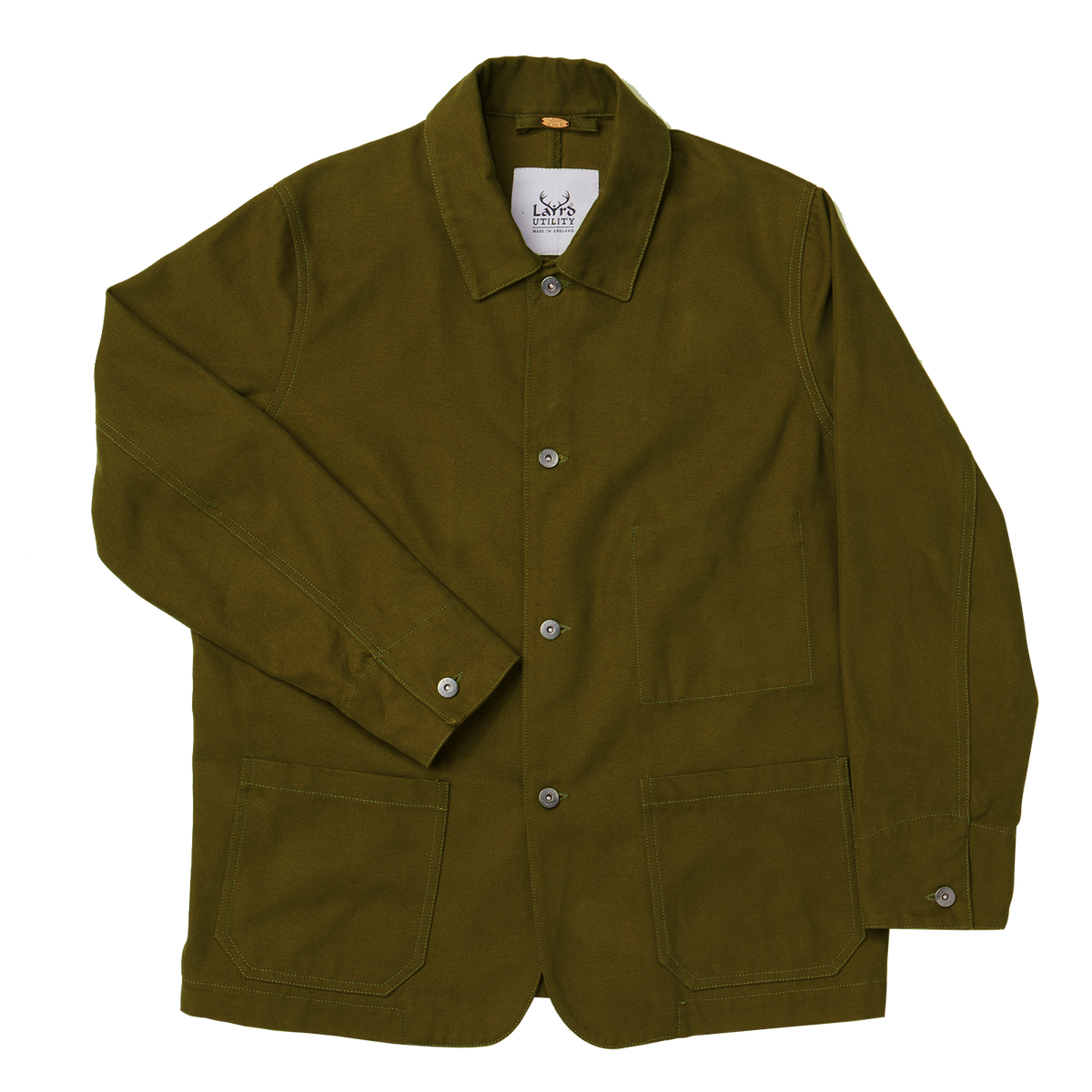
The word “worsted” is not another fibre. It describes a way of preparing and spinning wool into a smoother, more orderly yarn, generally associated with a cleaner surface and a more even, tailored appearance than a woollen yarn. A worsted wool gabardine may therefore suggest a crisp, refined cloth with good surface definition, but the phrase still does not prove a particular weight, abrasion rating or degree of water resistance. For a concrete example, Laird Utility describes its Gabardine Engineer Jacket as durable worsted wool gabardine with a tightly woven construction that is water-repellent and breathable. Those are the product’s stated qualities; they should not be generalised to every worsted gabardine garment.

Read the twill, density and weight as performance clues
A twill’s diagonal lines are not merely decorative. Their direction and prominence can affect how light plays across the surface, how the cloth bends and how stable it feels in the hand. A clear, regular diagonal often gives gabardine its tailored appearance; a finer or less obvious twill may feel smoother and more discreet. Neither look is automatically better. Judge it against the garment’s purpose.
“Tightly woven” is a useful phrase, but it needs careful translation. A close construction may suggest a more compact surface, reduced air movement and better resistance to ordinary wind or a brief shower than a loose cloth of similar fibre. It can also contribute to a firm handle and resistance to distortion. It is not proof that the garment is waterproof, seam-sealed or suitable for prolonged exposure. Water can still pass through the cloth, seams, fastenings or pockets, and a treatment can wear over time.
Weight matters because it changes how the cloth behaves on the body. A heavier gabardine will generally feel more substantial, hold a sharper shape and offer more protection from cool air, although the fibre and weave still matter. A lighter cloth may move more easily, breathe more comfortably in warmer weather and make a better trouser or summer layer, but it is not automatically less well made. It is simply being asked to do a different job.
This contrast is visible in Laird Utility’s descriptions. The Gabardine Engineer Jacket represents the more structured example, while the Match Trouser is described as a lightweight, flowing gabardine with a soft bamboo-touch finish and pronounced drape. The same fabric name can therefore serve different priorities: sturdy outerwear in one garment, relaxed movement and summer tailoring in another.

From finish and construction to a buying decision
A finish changes the hand and sometimes the cloth’s surface response. “Soft hand”, “soft finish” or “bamboo-touch” describe feel rather than proving weakness or weather protection. Laird Utility’s Match Trouser, for example, is described as soft and flowing, which points towards comfort and drape rather than the performance of a weatherproof outer layer.
Read “water-repellent” as narrower than “waterproof”. It suggests that water may bead or shed from the surface for a time, but ask whether the claim applies to the cloth or finished garment and whether any limitations are stated. “Breathable” also needs context: it indicates moisture vapour can escape more readily than through an impermeable layer, but it does not guarantee comfort in every condition.
Finally, inspect the garment around the fabric. Lining, seams, pocket construction, fastenings, reinforcement and freedom of movement can determine whether the cloth’s qualities are useful in practice. For city wear or travel, consider crease recovery, layering and a comfortable weight. For country walking or a utility jacket, give more weight to a close, robust cloth and sound construction, while remembering that gabardine is not automatically waterproof.
Before buying, check six points: identify the fibre percentage; note the weave, yarn and density language; look for fabric weight; separate stated finishes from inferred performance; inspect the construction; and ask the maker for any missing details, including weight, yarn specification, intended season, lining and seams.
Frequently asked questions: Is 100% wool automatically better than a blend? No. Compare the whole specification and garment construction with the intended use. Does tightly woven gabardine mean waterproof? No. It may handle wind and light rain better than a looser cloth, but waterproofing depends on the full garment. Is lightweight gabardine poor quality? Not necessarily; it may be exactly right for trousers, warm-weather wear or layering. What if the label only says “gabardine”? Treat the judgement as provisional and ask about fibre, weight, density, finish and construction rather than assuming a performance guarantee.
Gabardine is best judged by the complete specification, not the name alone. Compare the fibre, weave, weight, finish and construction with the job you want the garment to do, and treat missing details as a reason to ask rather than guess.
That is the dependable route to choosing the right gabardine, whether you are buying a structured jacket or a lighter trouser.