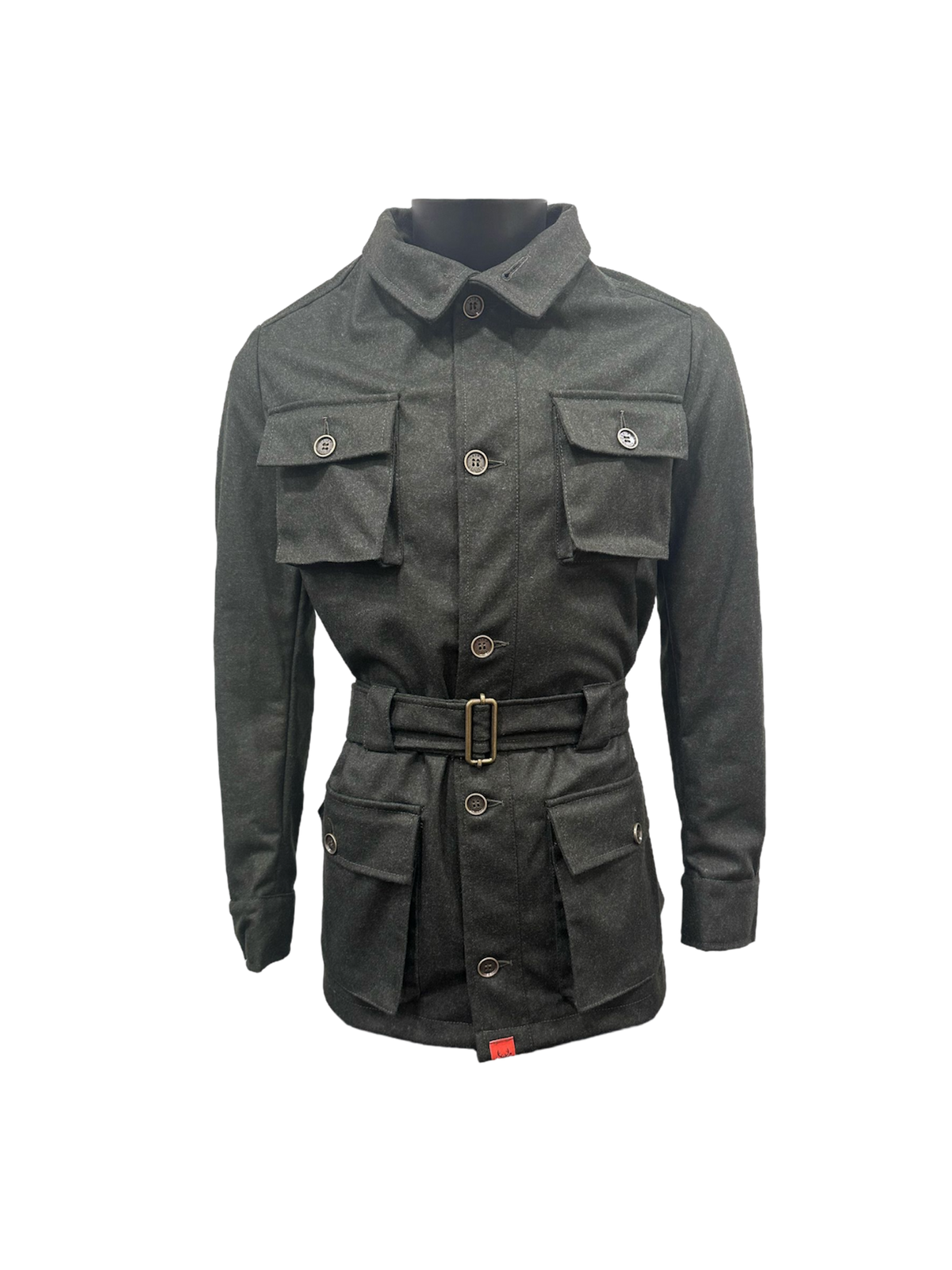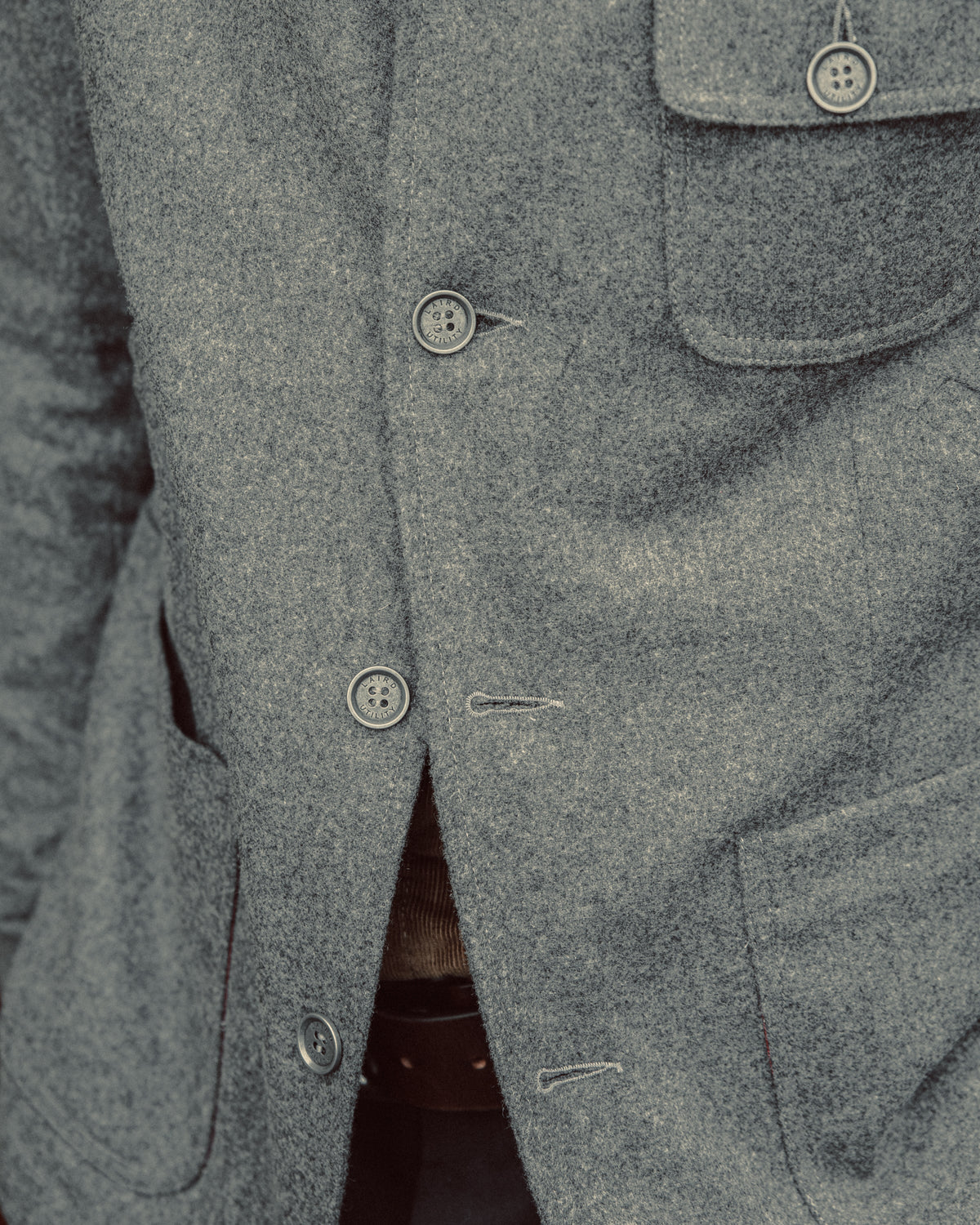

A hard-wearing garment is not truly built for a long life simply because its cloth is strong or its seams are difficult to break. At some point, a cuff will fray, a pocket will pull, a lining will wear through, or a fastening will need attention. The better question is whether the garment can be opened, repaired and reassembled as the same garment, with its proportions, drape and clean exterior intact.
This is the discipline of repair access. It means planning likely points of intervention into the pattern and construction, rather than treating access as an emergency measure. For utility jackets, trousers and overshirts, the aim is practical: make service possible without disturbing more of the garment than necessary.

Open and restore: what repair access really means
A seam that can be unpicked is not automatically a useful access point. It may be technically openable but difficult to close accurately if the cloth has stretched, the seam allowance is narrow, or there are no reliable reference points. Repair access is better understood as a complete sequence: reach the damaged area, release the minimum number of components, carry out the work, and restore every relationship between them.
For a jacket, those relationships include shoulder balance, sleeve pitch, collar roll, facing width and pocket position. For trousers, they include the crease, waistband level, seat balance, hem and the fall of both legs. Access should follow the garment's existing seam logic, not cut across a visible panel simply because that is the quickest route.

Prioritise the places most likely to need access
Design for access according to wear, strain and consequence. Cuffs, elbows, knees, seat and hems are exposed to repeated friction. Pockets and fastenings are pulled directly in use. Collars, waistbands and linings influence the shape of the garment around them, so a small repair can have a large visual effect if the surrounding construction is disturbed.
Useful priority areas include:
• Cuffs and hems, where wear is common and length must be preserved.
• Pocket mouths and pocket bags, where stress can spread into the surrounding panel.
• Elbows and knees, where a patch or replacement must respect the bend and grain of the original.
• Seat, waistband and trouser crease, where an apparently small alteration can affect balance and drape.
• Collars, facings and linings, which often need controlled access from the inside rather than through the outer shell.
• Fastenings, button stands and riveted points, where local reinforcement must not pull the front out of alignment.

Seam allowances, seam lines and controlled dismantling
A generous seam allowance is not wasted cloth when longevity is the objective. It gives a tailor material to work with after repeated pressing, abrasion and previous alterations. It can also allow a side seam, sleeve seam or waistband to be adjusted without immediately changing the outer proportions.
The allowance still needs to be placed intelligently. A wider margin at a serviceable seam is useful only if the seam can be reached without dismantling a collar, pocket or facing unnecessarily. Access points should follow existing seam lines wherever possible. Cutting across a clean front panel introduces a new line, risks visible distortion and may place the repair at a structural balance point.
A well-planned construction also allows controlled dismantling: unpick the necessary topstitching, release the relevant lining or facing, and preserve the original fold, turn and stitch relationships. Hidden reinforcements can help by taking strain away from the cloth around a pocket mouth, button stand or cuff. They should support the repair, not create a hard ridge that changes the garment's drape.

Modular panels and lining access without losing the silhouette
A replaceable panel can be valuable when damage is concentrated in one predictable area. A knee, elbow or pocket bag may be designed as a distinct component, allowing the tailor to service that part without opening the entire garment. The panel must still match the original grain, weight, colour and seam position; modularity is useful only when the replacement belongs to the same visual and structural system.
Lining access needs equal care. An opening inside a sleeve, side seam or hem can let a professional reach the shell while keeping the exterior untouched. The lining must be reattached with the correct ease, meaning the small amount of extra length that lets it move with the outer cloth. Too little creates pulling; too much produces folds and drag. Facings, interlinings and shoulder structure must also return to their original positions.

Construction cues that make reassembly accurate
Reassembly is more reliable when the garment carries its own map. Notches are small cuts or marks that show which edges meet. Grain references indicate the direction in which a panel should sit. Stitching lines, fold lines and carefully retained seam impressions can help a tailor return a cuff, pocket or sleeve to its original relationship.
For a new garment, useful service cues might include consistent seam allowances, clear panel boundaries and construction that can be read from the inside. For an existing garment, a tailor may create temporary reference marks during dismantling. These should be placed where they will not show and recorded before parts are separated.
Shape is preserved by checking the garment at several stages, not only when the last stitch is complete. A sleeve should be compared against its unaltered counterpart; a trouser leg should be checked for crease and hem level; a pocket should be measured against the opposite side. Pressing is part of the process, because a seam can be technically correct yet still sit poorly if its original fold and tension are not recovered.

How to judge whether a proposed repair will hold its shape
Before approving work, ask how the tailor will reach the damage and what will be disturbed on the way. A strong proposal should identify the access route, the reference points to be preserved and the checks that will be made before final pressing. It should also acknowledge uncertainty: worn cloth, faded areas, previous repairs and brittle lining can limit what a clean restoration can achieve.
Signs of a repairable garment that may still be difficult to restore neatly include:
• A very narrow seam allowance or clipped seam at the damaged area.
• Topstitching that crosses several layers and cannot be removed without marking the cloth.
• A lining fixed tightly enough to pull the shell when opened.
• Pockets, facings or fastenings placed directly over the proposed access route.
• Severe distortion, thinning or shrinkage around the damage.
• No matching cloth, thread, trim or original construction detail available.
A repair that promises a perfect result without discussing these limitations should be approached cautiously. The final outcome depends on the fabric's condition, the extent of wear and the tailor's judgement as much as on the original design.

The customer’s questions before a repair begins
A customer does not need to dictate the method, but should be able to understand the plan. Ask the maker or tailor:
☐ Where will you open the garment, and why is that the least disruptive route?
☐ Which original lines, grain directions and measurements will you use to reassemble it?
☐ Will the pocket position, sleeve pitch, trouser crease, hem level and lining ease be checked afterwards?
☐ Can the repair be made through an existing seam or replaceable section rather than across a visible panel?
☐ What hidden reinforcement is needed, and will it change the hand or drape of the cloth?
☐ What limitations arise from fading, thinning, shrinkage, missing matching cloth or earlier alterations?
☐ What will be visible from the outside, and can the garment be pressed and tried on before the repair is considered finished?

Repair access in practical British utility clothing
The principle suits the way a good utility garment is expected to live: in town, on the road and in the country, taking useful wear without becoming disposable. Laird Utility’s stated emphasis on practical clothing, versatility and British craftsmanship gives those ideas a precise constructional meaning: the garment should be serviceable as well as hard-wearing.
The Worker Jacket, Bench Jacket and Truck Denim Jacket illustrate visible construction priorities such as robust cloth, double-stitched seams, riveted buttons or a full lining. These details are useful context when discussing longevity, but they do not by themselves document hidden access points, modular panels or marked service lines. Those features should be confirmed with the maker or assessed by a qualified tailor.
For a customer choosing a jacket or trouser, the useful specification combines appropriate cloth, sound seam logic, accessible areas, recoverable allowances and a clear method for checking the original proportions after intervention. That broader view brings durability and serviceability into the same decision.

Frequently asked questions about repair access
Question: What should I ask a maker about repair access before buying?
Answer: Ask which areas can be reached through existing seams, whether the garment retains useful seam allowance, and how the maker would protect the original balance, grain and proportions during future work.
Question: What makes a repair plan credible?
Answer: A credible plan names the access route, the parts that must be released, the references that will guide reassembly and the checks that will be made before pressing and fitting. It also states what the cloth or previous wear may prevent.
Question: When is a replacement panel worthwhile?
Answer: It is worthwhile when the damaged area is predictable and the replacement can match the original grain, weight, colour and seam position. If those relationships cannot be controlled, a local repair may be less disruptive.
Question: Can a tailor guarantee that the garment will look unchanged?
Answer: No. A careful repair can preserve the intended shape, but fading, thinning, shrinkage, brittle lining, missing cloth and earlier alterations may leave visible or structural limits.
Question: Does repair access have to be visible?
Answer: Not always. It may be expressed through sensible seam lines and internal construction. The important point is that the maker or tailor can explain the route into the garment and the method for restoring it.

Durability is resistance; serviceability is recovery
The most useful way to judge a long-service garment is to hold two ideas together. Durability delays damage through appropriate cloth, sound seams and thoughtful reinforcement. Serviceability makes careful intervention possible when damage eventually arrives.
Repair access is successful only when the garment can be opened and restored without losing its intended proportions: the same pocket position, the same sleeve pitch, the same trouser crease, the same hem level and the same quiet drape. That is why access should be designed into seam lines, allowances, panels, linings and construction cues from the beginning.
For the customer, the practical test is simple: do not ask only whether a garment is hard to wear out. Ask whether a skilled professional could reach its vulnerable areas, understand its original construction and put it back together as the same garment.
A truly serviceable garment gives a skilled hand a clear route into its construction and enough material and reference points to restore its intended shape. That is the difference between making a garment easy to open and making it ready for a long life of careful use.