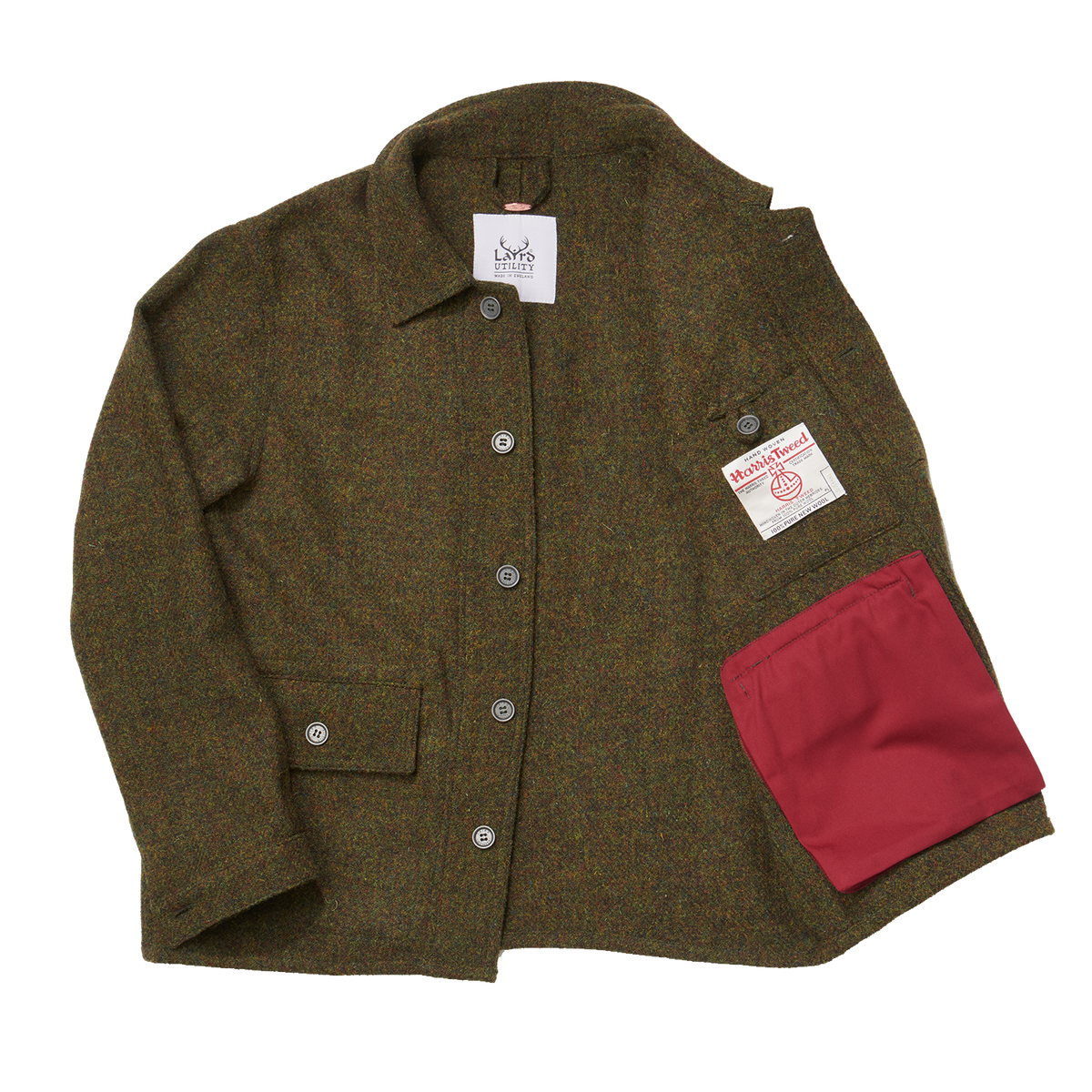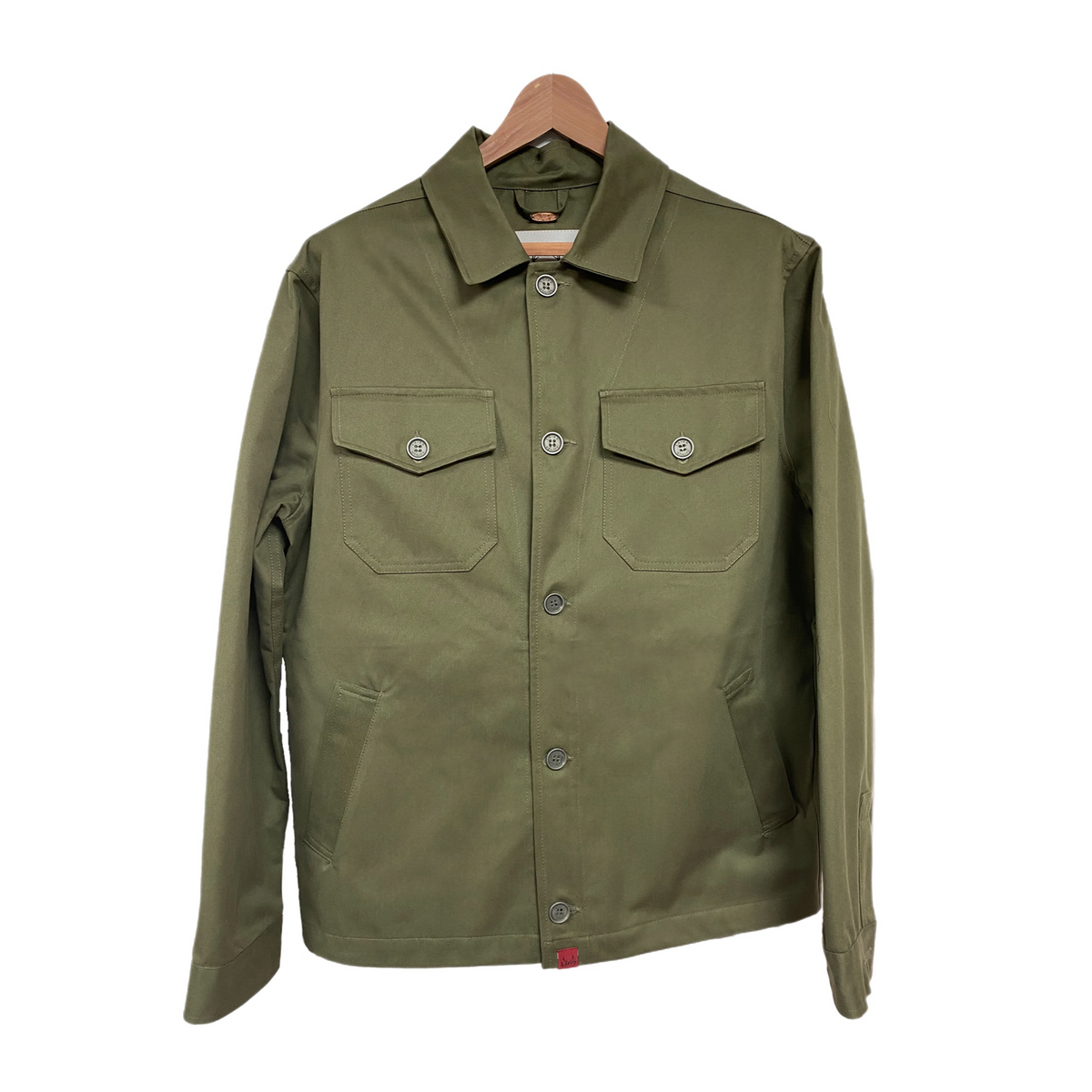

A hard-wearing jacket or pair of trousers does not usually fail everywhere at once. Cuffs fray, pocket mouths weaken, knees thin, and seat panels take the repeated pressure of movement. The temptation is to cut a new piece over the damage and sew it down. Sometimes that is sensible. But if the replacement changes the grain, stiffness, ease or position of a seam, the repair can preserve the cloth while quietly altering the way the garment hangs.
That is the distinction between an ordinary patch and genuinely modular construction. A modular garment treats likely wear zones as deliberate, serviceable sections within the pattern and seam architecture. The section can be renewed while shoulder balance, armhole shape, trouser rise, seat and other fit-critical components remain undisturbed. It is a practical discipline suited to clothing made for real lives: the same balance of utility, refinement and longevity that informs Laird Utility’s approach to British clothing made for urban and country living.

What modular construction actually means
A modular section is a planned piece of the garment that can be removed and remade along a controlled break line. The break might be a sleeve cuff seam, a shaped lower-sleeve panel, a pocket-mouth section, a knee panel, a seat piece or a hem-facing zone. Its position, shape and seam allowances should follow the garment’s existing structure, so the replacement settles into the original pattern rather than creating a new source of tension or bulk.
A visible darn or patch works on top of the original cloth. A replacement panel becomes part of the pattern again: it has a defined perimeter, a known grain direction and a construction order that allows the surrounding pieces to stay in place. That makes it closer to renewing a component than covering damage. It also explains why modularity should be considered at the cutting and making stage, rather than promised as a solution after the garment has already worn through.

Choose the wear zones, then protect the fit-critical structure
The best candidate for modular treatment is a section that wears predictably and can be bounded without cutting through the garment’s primary fit geometry. Cuffs, lower sleeves, pocket mouths, hem facings and selected knee or seat zones often meet that test. A shoulder, armhole, waistband or high hip usually does not: those areas control balance, movement and the relationship between the garment and the body.
On a jacket, the lower sleeve can sometimes be separated at a straight or shaped line below the elbow, provided the sleeve head and armhole remain untouched. On trousers, a knee zone can be planned around the natural bend without changing the rise or the position of the knee. A seat panel needs more caution because it interacts with the crotch curve, back rise and sitting ease. The aim is to isolate abrasion while leaving the garment’s tailored logic intact.

The construction details that make renewal possible
A section is only genuinely replaceable when the surrounding construction anticipates the work. The maker or repairer needs enough access to remove the worn piece without unpicking half the garment, and enough information to reproduce it accurately. That may mean a lining opening, a separable facing, a clean internal seam or a documented order of assembly. Access should serve a specific wear zone while remaining secure, comfortable and visually restrained.
The strongest systems also separate sacrificial cloth from fit-critical structure. A cuff can renew while the sleeve length and sleeve head stay fixed; a pocket-mouth piece can renew while the pocket bag and body balance remain intact; a knee panel can renew while the trouser rise and waistband relationship are left alone. The following details are useful questions when inspecting a garment or discussing a commission.
Details that make a section genuinely replaceable
- A planned break line with a documented pattern piece, grain line, notches and seam allowance.
- Compatible cloth, including weight, weave, stretch, nap, colour and expected shrinkage.
- Stable seam allowances that can be opened and resewn without steadily reducing the garment.
- Lining, underlining, facings and pocket bags arranged so the outer section can be reached and rebuilt cleanly.
- A recorded construction order, pressing method, stitch spacing and fastening position for future service.
- Enough controlled ease for movement, without allowing the replacement to distort the sleeve, leg or pocket.

Pattern architecture: making a replacement follow the original garment
A modular break point should look intentional because it belongs to the garment’s pattern language. A straight seam may suit a cuff or hem-facing; a shallow curve may distribute stress across a lower sleeve or knee. The line should avoid pockets, belt loops, darts and closures unless those details are deliberately designed to come apart and be rebuilt. If a replacement cuts across a pocket bag or fastening, the repair becomes a partial reconstruction rather than a controlled renewal.
The replacement piece needs a documented pattern, not merely an approximate tracing taken after the cloth has distorted. Keep the original piece, seam allowance, notches, grain line and notes about pressing or topstitching. Plan the lining, underlining and facings alongside the outer panel so the finished section preserves ease, drape and alignment rather than sitting correctly on the outside while pulling or restricting movement inside.

Material matching, finishing and the case for visible renewal
A replacement panel is judged by more than colour. Grain direction determines how the cloth reflects light and resists movement; nap must run consistently; stretch and recovery affect comfort; and cloth weight changes how a seam rolls and how a sleeve or trouser leg falls. Shrinkage matters too. A new piece that has not been pre-treated like the original may tighten after cleaning and pull the surrounding garment out of balance.
Colour matching is complicated by fading, abrasion and batches. Exact sameness is not always possible, particularly in a well-used jacket. In those circumstances, a deliberately contrasting cuff, lower sleeve or pocket-mouth panel can be more honest and more attractive than an almost-match that looks accidental. The contrast should still respect the garment’s scale, stitch language and function. A darkened edge, complementary cloth or purposeful topstitch can make the renewal read as part of the design rather than an apology.
Finishing details carry the same responsibility. Topstitch width, seam pressing, folded edges, button positions, lining joins and pocket-bag depth all affect whether the section behaves like the original. A repairer should test the new panel for bulk and movement before closing the lining. If the replacement adds stiffness at a bend or removes ease at a cuff, the garment may look neat on the table and feel wrong in use.
Before approving a modular replacement, ask the maker or alterations specialist to identify the wear zone, show the proposed break line and explain which measurements will remain untouched. Ask whether the original pattern piece or a measured record will be retained, how the cloth will be matched or intentionally contrasted, and how the lining, facings, pocket bags and fastenings will be reopened and finished.
It is also worth asking what happens if the underlying garment has already lost strength. A new panel cannot restore a stretched armhole, a distorted rise, widespread thinning or a waistband that no longer relates correctly to the seat. At that point, a larger recut, alteration or retirement may be the more honest decision. Modularity extends useful life when the garment still has a sound structure to preserve; it is not a guarantee that every garment can be rebuilt.
A successful modular garment gives each likely failure a sensible boundary, records the pattern and allows renewal without disturbing the shape that made the garment worth keeping. That is tailoring applied to utility: practical serviceability, controlled intervention and character retained.
FAQ
How is a modular panel different from an ordinary patch?
It is a planned pattern section with a defined break line, grain and seam allowance, designed to be renewed without disturbing nearby fit.
How can a replacement panel retain the garment’s fit?
By preserving the original seam positions, ease and proportions, particularly around the shoulder, armhole, rise, seat, knee and waistband.
Does replacement cloth have to match exactly?
No. Weight, weave, stretch, nap and shrinkage affect behaviour as much as colour. When an exact match is unavailable, a deliberate contrast can be the better choice.
When is a visible renewal better than trying to hide the repair?
When the original cloth has faded, is unavailable or would require awkward extra seams to imitate. The contrast should still suit the garment’s scale and stitch language.
When is replacing a section no longer worthwhile?
When the surrounding structure is broadly weakened, distorted or poorly fitting. A larger alteration or retirement may then be more sensible.