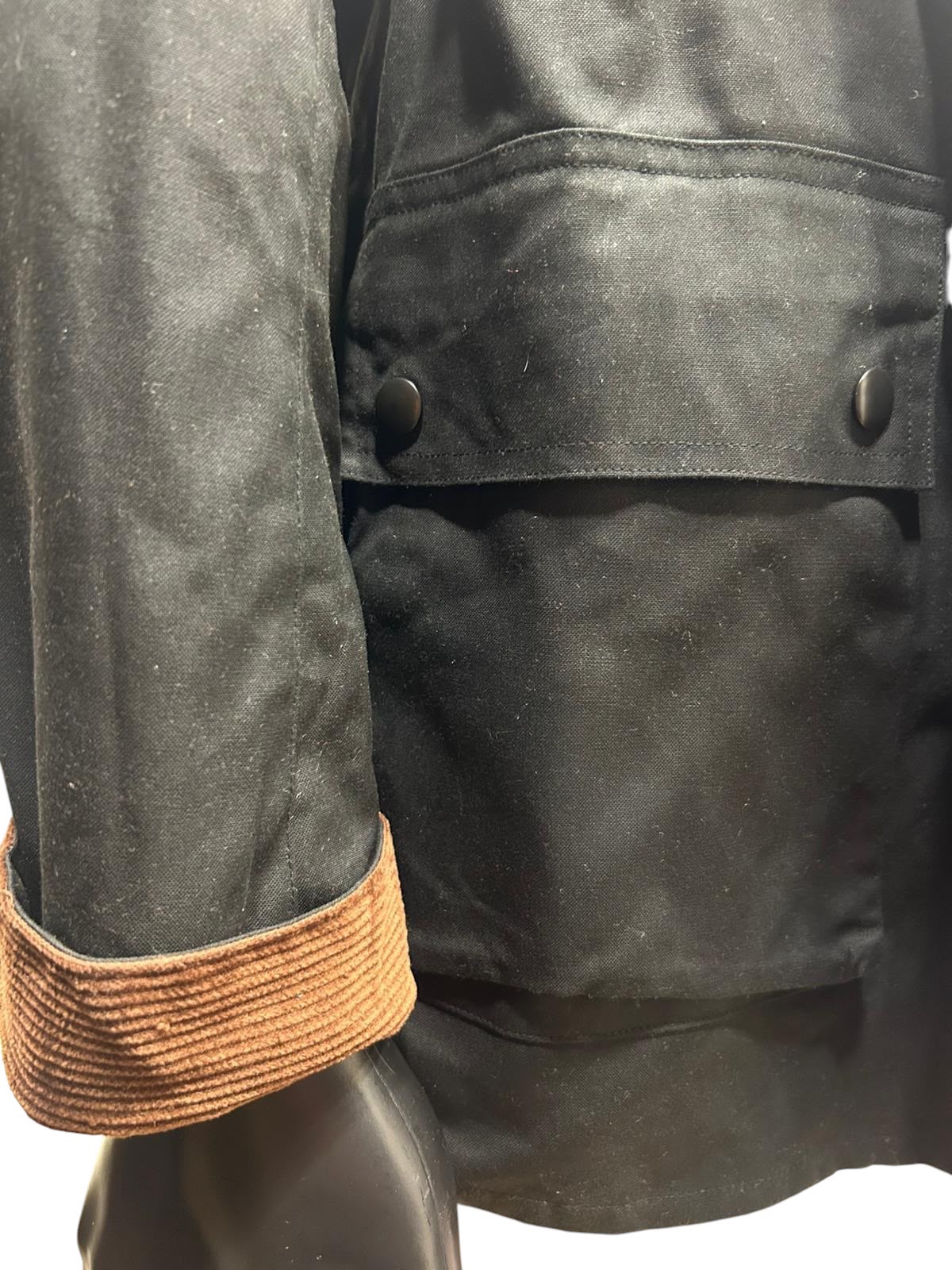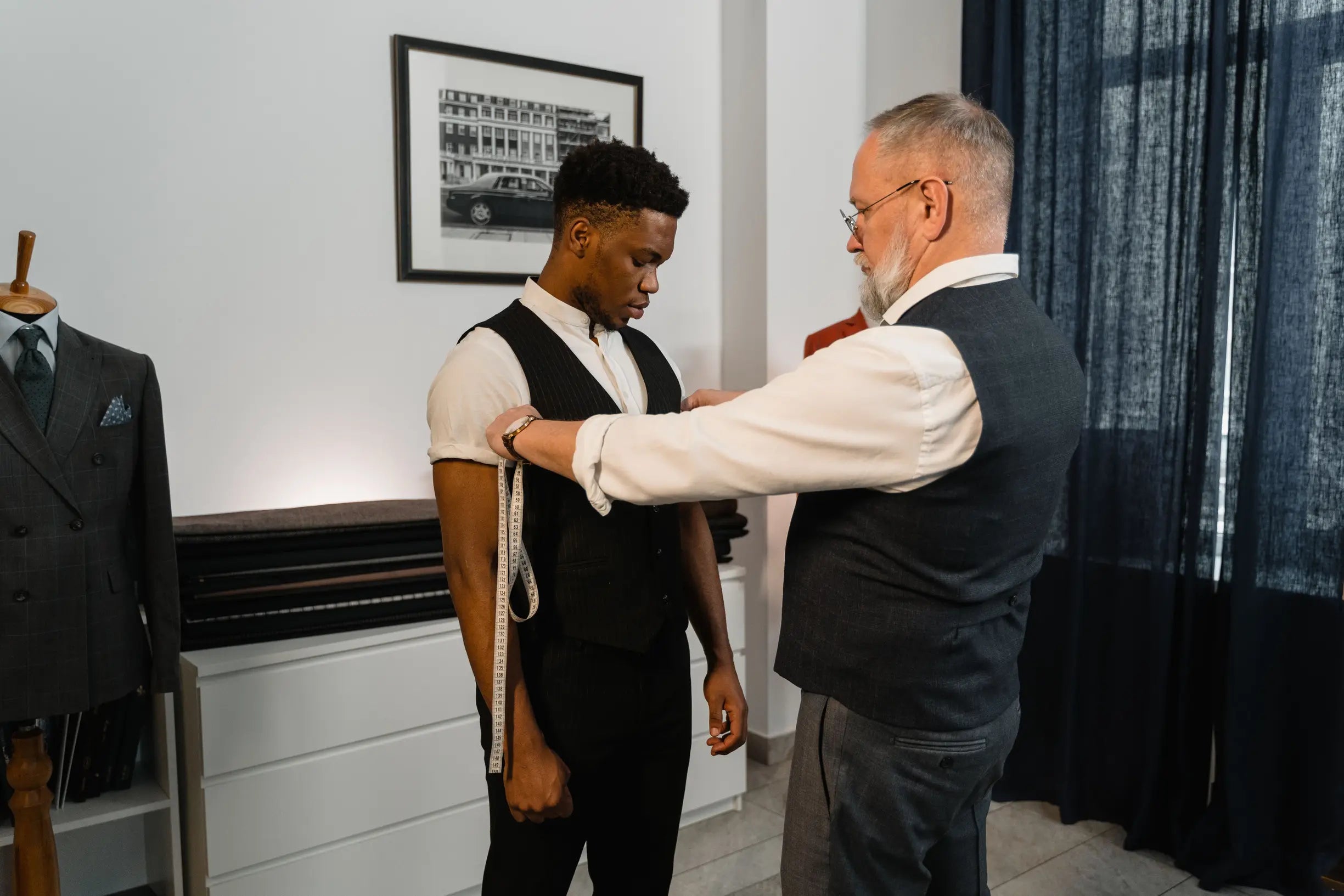

How do heavy-duty details from British workwear survive the move from workshop to wardrobe? Tailors preserve practical features such as harness pockets and reinforced seams, then rework them so garments retain their utility, allow freer movement, and adopt a more refined silhouette.
Below are three core tailoring approaches: harness-style pockets and reinforced panels to support practical movement, repatterning and tapering to create a refined silhouette, and contemporary finishes that extend a garment's working life. Examples of stitch placement, seam reinforcement, and altered pattern lines show how tailors preserve utility without sacrificing polish.

1. Harness-style pockets and reinforced panels for ease of movement
Harness pockets began as deep, wide, angled openings designed for hands-free access. Modern tailoring trims that volume while keeping reach: tailors reduce the pocket bag, the pocket's internal depth, from around 20 to 25 cm to roughly 12 to 15 cm, and set the opening at a modest 10 to 15 degrees so access remains easy without adding bulk. To preserve mobility discreetly, small additions such as a 2.5 to 4 cm side gusset or a shallow box pleat at the pocket mouth can provide 3 to 5 cm of give when required, then collapse so the garment reads tailored rather than bulky. Craftsmen also raise the pocket mouth by about 2 to 3 cm to align with the natural hand rest, omit external patching, and use fine topstitching placed roughly 3 mm from the edge so the detail appears purposeful and refined.
Reinforcements can transfer load without making a garment look overtly workwear. Use discreet bar-tacks, narrow woven webbing, a four- to six-centimetre square internal patch behind the top corner, or roughly six to eight tightly packed bar-tack stitches to prevent tear-out. Choose lighter pocket-bag fabrics, such as cotton cambric or fine twill, to reduce weight. Finish pocket openings with flat-felled or bound seams, and add a narrow fusible tape at the top to maintain a crisp edge while keeping the build-up minimal. These choices illustrate the trade-off between strength and bulk: lighter pocket bags require concentrated reinforcement, but they allow a garment to retain its functional intent while appearing contemporary and neat. Tailors therefore combine geometry, reinforcement, and seam finishing so that harness pockets remain usable, yet integrate cleanly into modern silhouettes.

2. Re-cut and taper garments to create a refined silhouette
Begin with a measured pattern audit. Pin the garment on a dress form or the client and photograph front, back, and side views. Mark where the silhouette looks boxy or out of proportion, and note seamlines, grain, and functional details such as patch pockets, pleats, and reinforcement panels. These observations indicate which elements you should preserve. Repattern the back and body by introducing strategic seams and darts. For example, convert a wide single-panel back into a split back, or add vertical darts to remove excess circumference while retaining shoulder width and chest ease. Lay the revised seamlines over the original to compare before and after; the comparison will guide your decisions. Taper sleeves and trouser legs without sacrificing mobility. Re-cut the sleeve cap and slim the forearm, leaving sufficient cap ease to avoid puckering. For trousers, reshape inseams and outseams, or employ slash-and-overlap and graded seams, to control how the fabric drapes around the knee and ankle. Wherever possible, keep original pocket positions and other workwear cues so the garment retains its character as the silhouette becomes more refined.
After repatterning the body and refining the back, redraw the collar, lapel, and facings to the new proportions. Scale down the stand height and roll, true the balance between chest and lapel, trace the original pieces, and mark new notch positions before assembling a toile. For clean lines and a lasting shape, grade and trim seam allowances, understitch facings, and add lightweight stay tape or reinforcing stitches at stress points to prevent stretch and bulk. Press and mould curved areas on a ham or sleeve roll, then test the refitted garment in motion to ensure the adjustments perform in real wear rather than only on a static form.

3. Apply contemporary styling and durable finishes to prolong a garment's life
Tailors reinforce high-stress points with invisible methods: bartacks, box-stitches, internal stay tapes, and discreet bar-tacking at pocket corners and belt loops. These are often set inside seam allowances or behind facings, preserving a clean, contemporary silhouette while preventing pull-through and seam failure. They hide robust hardware with colour-matched or covered zips, concealed rivets, and reinforced pocket bags, keeping durable components out of sight and maintaining a minimalist appearance. Finished details such as bound buttonholes, hand-finished felled seams, neatly clipped corners, and targeted interfacing in collars and cuffs reduce fraying and preserve crisp lines. They also make later alterations or component replacement straightforward.
Beyond hidden hardware and reinforcement, designers modernise proportions to remove bulk while preserving mobility. Tapered waists, narrowed sleeve channels, and articulated elbows or underarm gussets retain the garments' original functional geometry in a neater silhouette. Surface treatments prioritise serviceability: durable water-repellent coatings, and waxed or polymer finishes that accept reproofing. Manufacturers test new finishes on a hidden patch to assess hand and breathability, allowing performance to be renewed. By favouring pliable finishes and discreet reinforcement, garments sit tailored, move naturally, and can be repaired or reproofed rather than discarded.
Tailors translate heavy-duty British workwear into contemporary garments that retain utility without adding bulk by reworking geometry, reinforcement, and finishing. They trim pocket bags to reduce volume, concentrate reinforcements in high-stress areas with internal patches and bar tacks, and repattern panels and sleeves so reach, strength, and mobility remain, while the silhouette reads tailored.
To evaluate these adaptations, look for three common approaches: adjustments to pocket harnesses and targeted reinforcements at stress points; repatterning and tapering to refine the silhouette; and renewable surface treatments, such as durable water-repellent coatings or re-waxable finishes. Recognising these construction choices helps you judge workmanship, request sensible alterations, and choose pieces that allow ease of movement and will endure.