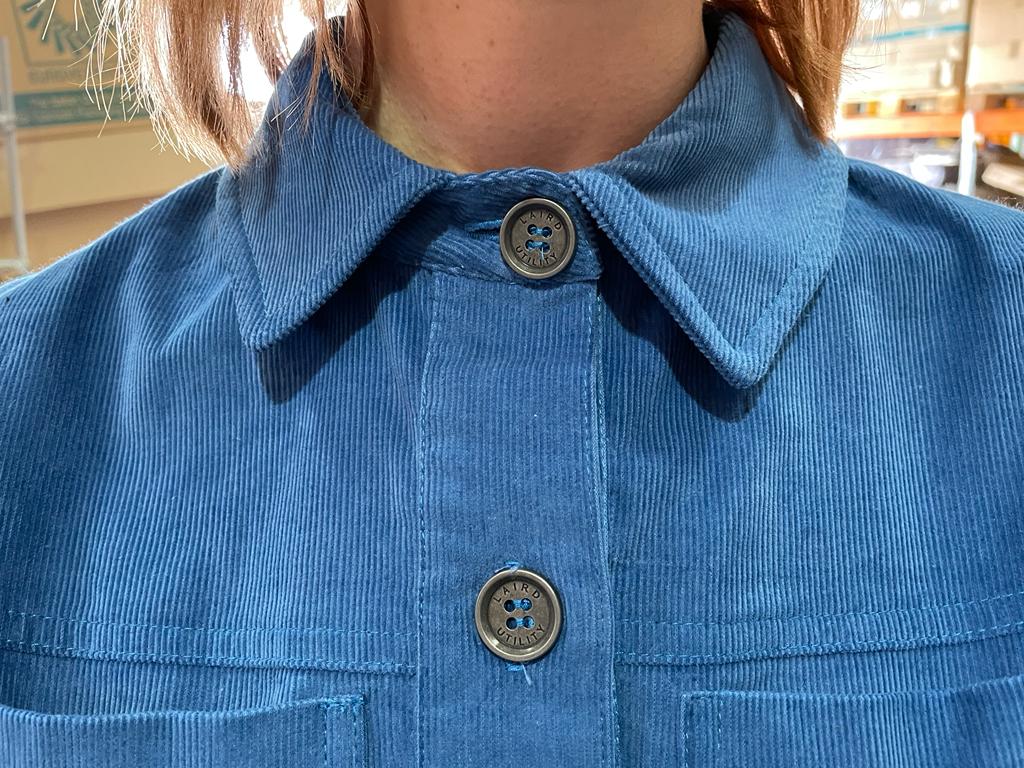

Twill must reconcile three qualities: shape retention, breathability, and weather resistance. The design challenge is to introduce structure and protection while preserving airflow and avoiding added bulk or any loss of comfort.
This guide divides the problem into five practical areas: optimising weave density and fibre composition, strategic panel cutting and seam placement, tailored interfacings and linings, sealing seams and finishing edges to improve weather resistance, and engineered ventilation with moisture control and testing. Each section outlines concrete adjustments and simple tests to help you weigh trade-offs and refine your designs with confidence.

1. Optimise weave density and fibre blend
When developing a cloth, make iterative swatches that vary warp and weft density, and measure air permeability alongside dimensional stability. Those metrics reveal the trade-off between porosity and shape retention. Tightening the weave reduces porosity and improves wind and spray resistance, while a slightly lower weft density preserves crosswise airflow and drape. Use fibre blends to combine recovery, warmth, and moisture control: introduce a small proportion of elastic or a high-crimp synthetic to aid shape retention, pair long-staple natural fibres for wicking performance and hand, and place hydrophobic filaments on the outer face to encourage water beading.
Choose yarn structure deliberately. High-twist or compact-spun yarns pack more tightly and resist distortion and pilling, while textured, slub, or open-structure yarns create micro-channels that improve breathability. In the fabric cross-section, orient smoother filaments towards the exterior to reduce surface wetting, and position staple or brushed yarns on the interior to trap air and aid thermal comfort. Validate the construction with simple, repeatable checks: a breath test or air-permeability gauge for airflow; bead formation and soak-through for weather resistance; and crease recovery and post-launder shrinkage for shape retention. Record the results and iterate until the fabric achieves the intended balance of durability, comfort, and weather protection.
Choose a reproofable waxed outer for lasting weatherproofing.

2. Cut panels strategically, position seams to refine fit and drape
Align panels with the twill's wale and the fabric grain to control drape and recovery. Recovery is the cloth's ability to return to shape, so cut main body panels with the wale running vertically when you want a stiffer, less creased behaviour. Cut selected panels on the bias when controlled stretch and improved moulding around curves are desirable. Always test small swatches to compare recovery, hand, and directional appearance before finalising the layout. Place seams to follow natural movement and load paths. Use princess seams, articulated shoulder or armhole seams, and curved side panels to build three-dimensional form that resists bagging and helps shed water from the surface. Route stitch lines to follow the direction of stress to reduce seam pull, and grade seam allowances at multi-layer intersections to avoid unnecessary stiffness. Where possible, let excess bulk fall into less visible areas and trim or nest intersections so the garment retains a clean, functional silhouette.
Integrate ventilation into panel and seam design, using underarm gussets, centre-back vents, or side panels that open into mesh-lined channels. Add overlapping seam flaps or external storm plackets to deflect rain while preserving airflow. Use discreet internal reinforcement and subtle shaping: stay-stitch curved openings, apply minimal interfacing at yokes and shoulders, reinforce stress points with bar tacks, and include small pleats or articulated gussets to allow controlled expansion without changing the silhouette. Test placements on wearable prototypes to confirm reinforcements preserve shape without restricting airflow.
Choose lightweight gabardine for controlled drape and breathability.

3. Anchor silhouette with tailored interfacings and full linings
Match the interfacing weight to the main fabric and align its grain with the twill diagonal, testing the combination on a scrap first. For fine twill, opt for lightweight woven or non-woven stays at collars, cuffs, and plackets. Stabilise body panels with midweight sewn canvas, and use open-weave horsehair or cotton canvas in hems and the chest to add resilience while allowing air to pass. Select breathable linings such as cupro, viscose, or cotton voile for full linings, and perforated tricot or mesh for backs, underarms, and pocket bags. Float the lining from the shell at strategic seams to create internal air channels that reduce clamminess. Before inserting the lining, anchor key seams on the shell with narrow stay-tape or twill tape at the shoulders, armholes, and front edges to distribute tension and prevent seam stretch without over-stiffening the garment.
When shape matters, pad-stitch a shaped canvas or horsehair into collars, lapels and shoulder heads, leaving the surrounding areas unstitched so the garment can ventilate rather than lock rigidly. Test stitch length and density on sample pieces, varying both until the balance between moulding and airflow suits the fabric weight and the wearer’s movement. For weather resistance, laminate a thin waterproof, breathable membrane to the lining or fit internal taped seams at the shoulders and hems; these shed water while keeping the bulk of the garment vapour-permeable. Combine these measures with mesh yokes, vented back panels or removable linings so the wearer can switch easily between protection and maximum airflow.
Choose a twill mid-layer for structured, breathable wear.

4. Seal seams and finish edges to weatherproof garments
Choose seam constructions that enclose raw edges and control bulk. Flat-felled seams give low-bulk strength in heavier twills, French seams tidy lightweight fabrics, and bound seams provide a neat, flexible finish. Adopt a consistent seam allowance strategy — for example, 12 to 15 mm for general work, with larger allowances at reinforcement points — and trim or grade allowances so thicker layers sit flatter and seams do not pucker, preserving the twill’s structure and air channels. When needle holes compromise a coating, restore continuity by applying seam tape or a liquid seam sealant directly to the stitch line, and always test adhesion on a scrap using the heat or pressure technique suited to the fabric. For coated or synthetic twills, trial hot-melt welding or ultrasonic sealing on scraps to dial in settings that avoid scorching or stiffening; welded seams give continuous weatherproofing and a clean, low-bulk profile that maintains airflow.
Finish raw edges to prevent fraying and reduce bulk at hems. For stretch-prone edges, overlock or use a narrow zigzag stitch; for informal linings, pinking shears are effective; and for a tidy, breathable edge, apply bias binding. In every case, trim to a consistent allowance, finish the edge, and press flat. Reinforce high-stress or entry points with bartacks or small patch reinforcements at corners and pocket openings. Protect zips with storm flaps or taped seams so vulnerable junctions remain sealed. Position sealed seams clear of core ventilation zones to retain breathability while preventing water ingress where it matters most.
Delivers weatherproof warmth while preserving breathability.

5. Engineer ventilation and moisture control, then verify performance under real conditions
Targeted zone ventilation, such as vents, mesh panels, or channelled backings placed on the back, under the arms, and behind the knees, improves airflow and helps move moisture away, while overlapping flaps or internal baffles shed driving rain. Apply water-repellent finishes only to exposed outer panels and leave ventilation zones uncoated to preserve breathability. Patterned or masked coatings, or micro-perforated laminates, can restore air permeability without forming direct water channels. The choice of yarn and twill weave also balances shape and breathability: slightly more open picks per inch, or capillary or hollow yarn cross-sections, encourage wicking and air passage, whereas tighter weaves increase weather resistance and help garments retain their shape.
Construction details such as storm flaps, internal seam guards, and shaped interfacing at collars, cuffs, and hems reduce water ingress and lock in a garment’s geometry so it retains shape when wet. Localised stabilising treatments, for example resin fixation in narrow bands or topstitched reinforcement, concentrate stiffness in targeted bands without stiffening the whole panel. When laminates are employed, pairing a hydrophobic outer face with a hydrophilic, moisture-wicking inner face moves sweat away from the body while preserving surface water resistance. Quantify performance by measuring air permeability, moisture vapour transmission, and hydrostatic resistance before and after abrasion, washing, and wear trials, and use those before-and-after metrics to iterate finishes, weave density, or spot lamination.
A twill that keeps its shape, breathes, and resists light rain begins with deliberate choices in weave density, fibre blend, panel cutting, and seam placement. Tailored interfacings and linings, careful seam finishing, and designed ventilation then control structure and comfort. Iterative swatches and repeatable tests — for example, air permeability to assess breathability, hydrostatic resistance to measure water performance, and crease recovery to judge drape — quantify trade-offs and guide targeted adjustments.
To validate those choices, begin with small test panels that compare variables such as wale orientation (the direction of the fabric ribs), seam construction, and local stabilising treatments. Observe how each change affects drape, stretch, and water behaviour. Apply water-repellent finishes sparingly and seal only critical seams. Record measurable performance before and after each treatment, including breathability, durability, and water resistance, so you can iterate toward a twill that balances protection with comfort.